Dryer Taking Forever? 6 Common Causes and Simple Fixes
If your clothes come out damp after a full cycle, or you're running the dryer twice to finish one load, something is slowing it down. The good news is that many of the most common causes are things you can check yourself in a few minutes. Here's what to look for before you call for service.
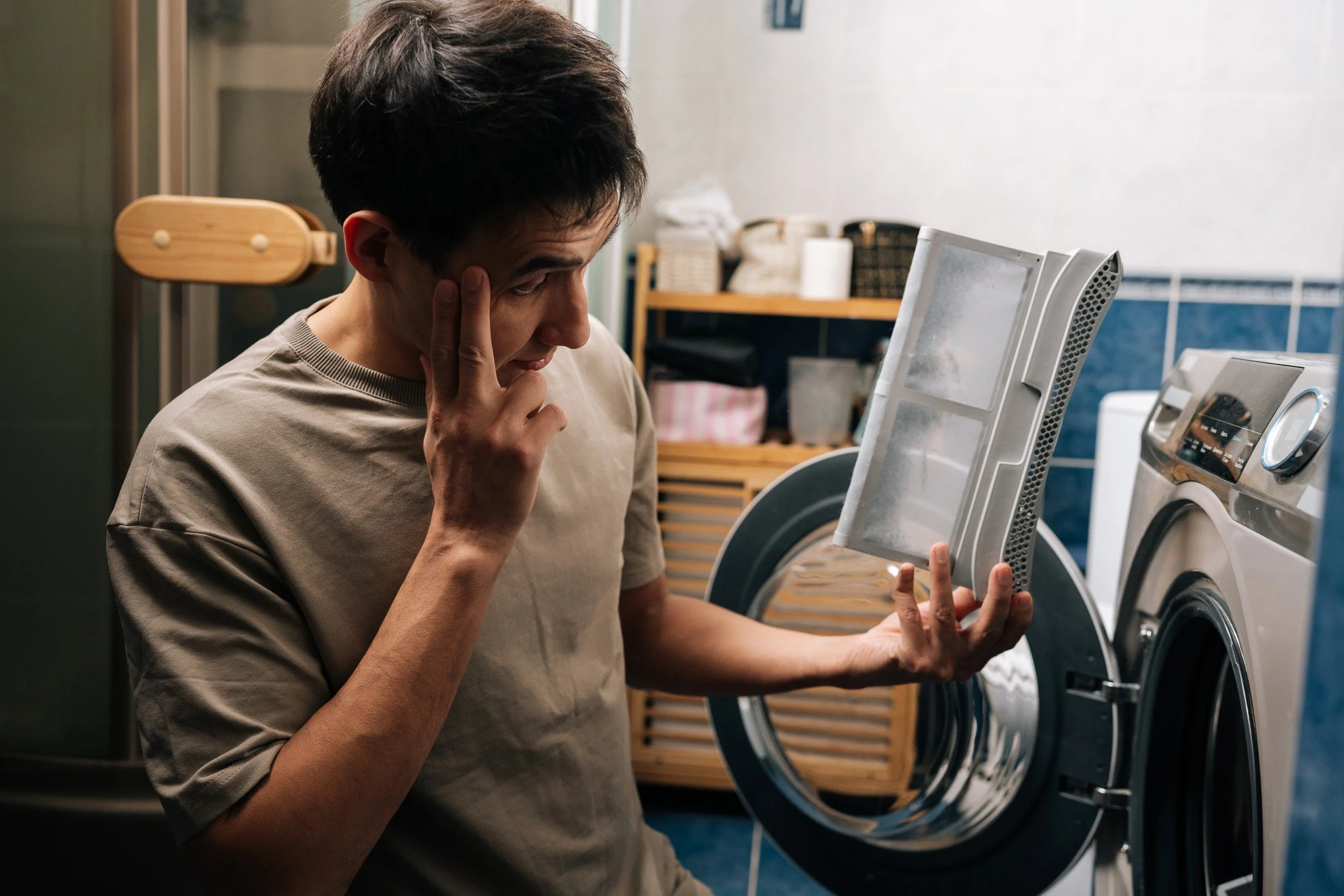
1. Clean the Lint Screen Every Load
The lint screen catches fibers before they reach the vent. When it's clogged, air can't move through the drum, so clothes dry slowly and the dryer works harder than it should. Pull it out and clear it before every load.
Every few months, wash the screen with warm soapy water and a soft brush. Dryer sheets can leave a film on the mesh that you can't see but that still blocks airflow. Let it dry completely before putting it back.
2. Check the Vent Hose Behind the Dryer
Slide the dryer out and look at the duct that runs from the back of the machine to the wall. Look for kinks, crushed sections, or a hose that's been pushed flat against the wall. Any of these restricts airflow.
If you have the thin white vinyl or foil-style hose, consider replacing it with semi-rigid metal duct. It holds its shape better and is the type most dryer manufacturers recommend.
3. Clear the Outside Vent
Go outside while the dryer is running and find where the vent exits your house. You should feel a steady stream of warm air. If the airflow is weak, or the flap is stuck closed or packed with lint, the vent line is likely clogged.
Here in Midland and Odessa, blowing dust and debris can collect around exterior vents, and birds and insects sometimes nest in them, so it's worth checking a couple of times a year. Lint buildup in a dryer vent is also a fire hazard, so don't put this one off.
4. Don't Overload (or Underload) the Drum
Clothes need room to tumble so warm air can move around them. A packed drum leaves a damp wad in the middle. A very small load can dry unevenly too, especially on dryers that use a moisture sensor. Aim for a drum that's about half to two-thirds full.
5. Take a Look at the Washer's Spin Cycle
Sometimes the dryer isn't the problem. If clothes come out of the washer dripping wet, the dryer has far more water to remove. Make sure you're using the right spin setting for the load, and watch for a washer that stops early or leaves water in the tub. A washer that won't spin or drain properly is worth having checked.
6. Wipe Off the Moisture Sensor
Many dryers use two small metal strips inside the drum, often near the lint screen, to sense when clothes are dry. Fabric softener and dryer sheets leave residue on them, which can make the dryer shut off early and leave clothes damp. Wipe the strips with a soft cloth and a little rubbing alcohol. Your owner's manual will show where they are on your model.
When It's Time to Call a Technician
If you've worked through these steps and your dryer still runs cool, won't heat at all, shuts off early, makes grinding or squealing noises, or smells like something is burning, stop using it and have it inspected. Those symptoms usually point to a part inside the machine, such as a heating element, thermal fuse, gas igniter, or drum belt, that needs a proper diagnosis.
If you have a gas dryer and smell gas, don't try to troubleshoot it. Leave the house and call your gas utility right away.
Dryer Repair in Midland & Odessa, TX
All American Appliance Service repairs washers and dryers throughout Midland & Odessa, TX. You'll get a quote before any work begins, and every repair is backed by our 90-Day Parts & Labor Guarantee. Learn more about our washer and dryer repair service, book your appointment online, or call (432) 559-9465.