Get Your Oven Ready Before the Holiday Cooking Starts
Thanksgiving is the one day of the year your oven really gets tested. A turkey, a couple of casseroles, pies, and a stovetop full of pots all at once. If something is going to go wrong, that's when you'll find out.
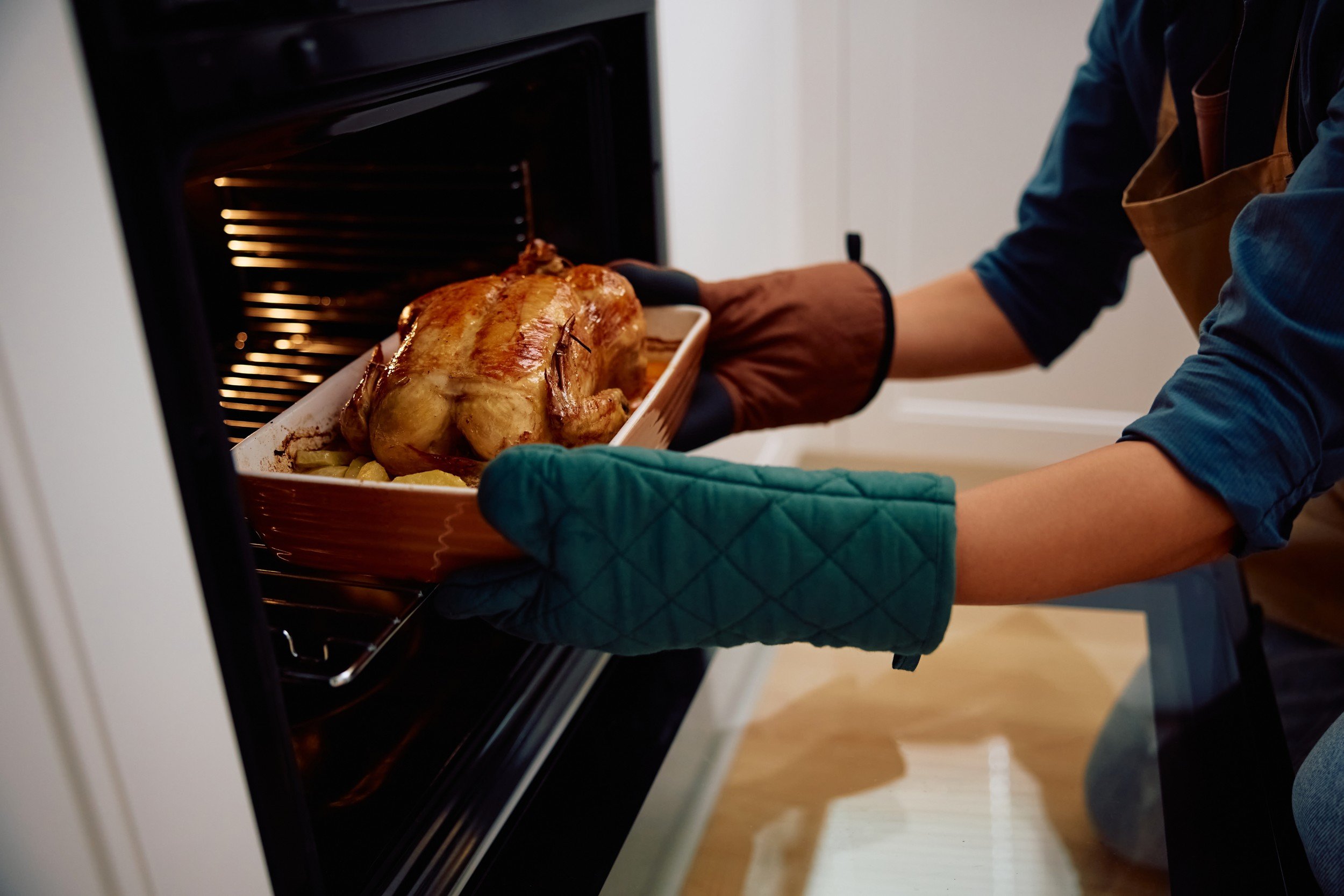
The good news is that most oven problems give you warning signs weeks ahead. Here's what to check now, while there's still time to fix it without wrecking a holiday meal.
1. Check Whether Your Oven Is Actually Hitting the Right Temperature
Ovens drift out of calibration over time. If your cookies have been browning too fast, or a casserole takes 20 minutes longer than the recipe says, the temperature may be off even though the display looks right.
An inexpensive oven thermometer will tell you. Hang it from the center rack, set the oven to 350 degrees, and let it fully preheat for about 20 minutes. If the thermometer reads more than about 25 degrees off, your oven needs attention. Many models can be recalibrated, and your owner's manual will say whether yours is one of them.
2. Clean It Now, Not the Night Before
If you use the self-clean cycle, run it at least a few weeks ahead of the holidays. The cycle runs extremely hot, and that heat is hard on components. If a thermal fuse or control board is going to fail, self-clean is often what pushes it over the edge. Far better to find out in October than the night before company arrives.
Wipe up heavy spills by hand first so there's less to burn off, and make sure the kitchen is well ventilated while the cycle runs.
3. Look at the Door Seal
Open the door and run your hand around the rubber gasket. It should feel springy and sit flush all the way around. If it's cracked, flattened, or torn, heat escapes, and your oven will run cool and cook unevenly no matter how accurate the thermostat is.
Also check that the door closes squarely and doesn't sag. A door that won't seal properly is one of the most common reasons an oven "just doesn't cook like it used to."
4. Watch Your Burners and Elements Heat Up
On an electric range, turn on each surface element and the bake and broil elements, and watch them come up to heat. They should glow evenly. Blistering, visible breaks, or a spot that stays dark usually means the element is failing.
On a gas range, each burner should light within a few seconds and burn with a steady blue flame. A burner that clicks a long time before lighting, or burns yellow and lazy, needs to be looked at. If you ever smell gas, leave the house and call your gas utility right away rather than troubleshooting it yourself.
5. Don't Ignore the Microwave
The over-the-range microwave does a lot of quiet work during the holidays. Make sure the turntable spins freely, the door latches firmly, and the vent fan and light both work. If the microwave keeps running when you open the door, or runs but doesn't heat, stop using it and have it checked.
6. Pay Attention to Smells, Sounds, and the Breaker
A burning or electrical smell, a buzzing control panel, error codes on the display, or a range that trips the breaker are not things to work around until after the holidays. Those point to an electrical problem that gets worse, not better.
A Quick Note on Timing
Parts for ovens and ranges sometimes have to be ordered, and that takes a few days. Late November is the busiest stretch of the year for appliance repair, so a problem you notice in October is far easier to solve than the same problem found on the Tuesday before Thanksgiving. If something on this list looks off, it's worth handling early.
Oven & Range Repair in Midland & Odessa, TX
All American Appliance Service repairs ovens, ranges, and microwaves throughout Midland & Odessa, TX. You'll get one clear price for parts and labor before any work begins, and every repair is backed by our 90-Day Parts & Labor Guarantee. Learn more about our oven and range repair service, book your appointment online, or call (432) 559-9465.